Thursday, May 15, 2014

Download Captain America Winter Soldier

Captain America: The Winter Soldier

Captain America: The Winter Soldier is a 2014 American superhero film featuring the Marvel Comics character Captain America, produced by Marvel Studios and distributed by Walt Disney Studios Motion Pictures. It is the sequel to 2011's Captain America: The First Avenger and the ninth installment in the Marvel Cinematic Universe (MCU). The film is directed by Anthony and Joe Russo, with a screenplay by Christopher Markus and Stephen McFeely, and stars Chris EvansScarlett JohanssonSebastian StanAnthony MackieCobie SmuldersFrank GrilloEmily VanCampHayley AtwellRobert Redford, and Samuel L. Jackson. In the film, Captain America, the Black Widow and Sam Wilson join forces to uncover a conspiracy within S.H.I.E.L.D., while facing a mysterious assassin known as the Winter Soldier.
Christopher Markus and Stephen McFeely, who wrote Captain America: The First Avenger, stated before that film's release that they were working on a sequel, and in June 2012, Anthony and Joe Russo entered negotiations to direct. The following month, casting of the supporting roles began with the additions of Anthony Mackie and Sebastian Stan. Principal photography commenced in April 2013 in Los Angeles, California before moving to Washington, D.C. and ClevelandOhio.
Captain America: The Winter Soldier premiered in Los Angeles on March 13, 2014. It was released internationally on March 26, 2014 and in North America on April 4, 2014, in 2D, 3D, and IMAX 3D. The film became a critical and financial success, having grossed over $696 million worldwide. A sequel set to be directed by the Russo brothers is scheduled for release on May 6, 2016.

This Link For Download
http://files.indowebster.com/download/files/capt_america_2014cam_ganool_s21__006

Download RoboCop 2014 Torrent

RoboCop (2014 film)


RoboCop is a 2014 American science fiction action film directed by José Padilha. It is a remake of the 1987 film of the same nameand reboot of the RoboCop franchise. The film stars Joel Kinnaman in the title roleGary OldmanMichael Keaton, and Samuel L. Jackson.
Screen Gems first announced a remake in 2005, but it was halted one year later. Darren Aronofsky and David Self were originally assigned to direct and write the film, respectively, for a tentative 2010 release. The film was delayed numerous times, and Padilha signed on in 2011. In March 2012, Metro-Goldwyn-Mayer (successor company to Orion Pictures, the studio that released the original film) announced an August 2013 release, but that was then changed to February 2014. The principal characters were cast from March to July 2012. Principal photography began in September 2012 in Toronto[5] and Vancouver in Canada,[6] with additional locations in Hamilton, Ontario, and Detroit in the United States.
The film first premiered in Malaysia, Singapore and Taiwan on January 30, 2014. It was later released in the United Kingdom on February 7, 2014, and in the United States and Indonesia, both on the same date of February 12, 2014.[7] The film received mixed reviews, with praise towards the performances, updates and style, but criticism for the lack of violence, social satire and comparisons to the original film.
This Link For Download
http://adf.ly/myZnW

Wednesday, May 14, 2014

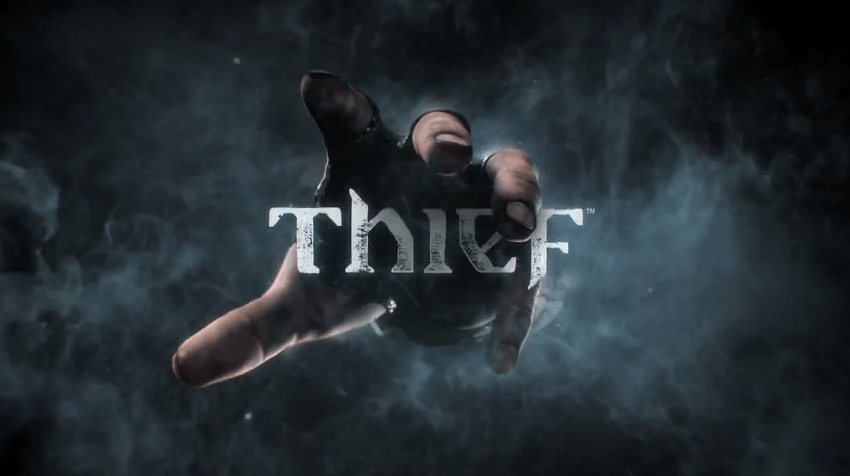
Thief (series)

Thief (series)


Thief is a series of stealth video games in which the player takes the role of Garrett, a master thief in a fantasy/steampunk world resembling a cross between the Late Middle Ages and the Victorian era, with more advanced technologies interspersed.[1]
The series consists of Thief: The Dark Project (1998), Thief II: The Metal Age (2000), Thief: Deadly Shadows (2004) and Thief(2014). An expanded version of Thief: The Dark Project, titled Thief Gold, was released in 1999 and features three extra maps and several bug fixes. Looking Glass Studios developed both The Dark Project and The Metal Age. After the studio had gone out of business in 2000, many former employees moved to Ion Storm Austin and began developing the third part of the series, Deadly Shadows, long anticipated by fans of the series. Eidos Montreal was subsequently given the reins for Thief.
The main tactic of Thief is to avoid fights and instead sneak around the enemies. Thief is sometimes described as either a "first-person sneaker", "sneak-em-up" or a "first-person looter" to emphasize this difference. Classification of the game has been slow coming, as three-dimensional stealth games, such as Tom Clancy's Splinter Cell and Assassin's Creed, only became more common years after the first Thief. Another innovation introduced by Thief is the careful use of sound effects as an integral part of gameplay. Sound cues not only tell the player of other characters in the vicinity, but also indicate how much noise Garrett makes when moving about an area. Too much noise can alert nearby guards, who will grow suspicious and come looking for intruders. There are a variety of tactics to avoid being heard, however, such as walking gently, steering clear of noisy pavement, or using moss arrows to create a carpet that muffles the sound of footsteps. In a similar vein, using light and dark became one of the most important strategies. A gauge at the bottom of the screen (called the 'Light Gem') indicates how visible the protagonist is. Entering deeper shadows or ducking makes the character less likely to be noticed. Walking about increases the risk of being spotted, and having a sword or bow drawn makes him very conspicuous in the game. The astute player is constantly keeping an eye on areas of light or shadow, guard patrol routes, and the type of terrain they are walking on, in case a hiding place is needed in a hurry. A light source, such as a torch or gas lamp, can be doused with a Water Arrow, creating an area of darkness in which the player may hide. Electrically powered lights, in all games, may simply be shut off by using a nearby switch or button; however, if no light switch is available, the electrical light will not turn off by simply shooting a Water Arrow at it. In Thief: Deadly Shadows, the player can simply 'pinch out' a lit candle by pressing the use button on it. A guard or any civilian may notice if a light source has been put out, likewise if something valuable has been stolen.
Another large component of game play in "Thief", along with the stealth, is exploration. In most missions, especially in the first two "Thief" games, players can freely explore the game environment without much hindrance. Players are also free to experiment with how they approach the AI, as one may choose to take out all the AI either by blackjack, sword, or arrow, or one may choose to avoid any confrontation with the AI. "Ghosting" is a play style by which one tries to leave no trace behind them as they explore and complete the objectives in each mission.

Thief: The Dark Project (1998)[edit]

Main article: Thief: The Dark Project
Released by Looking Glass Studios in 1998, and powered by their own in-house developed Dark EngineThief: The Dark Project was in many ways a revolutionary title. Perhaps foremost is that the title is arguably the first major release fantasy-themed video game which presents a morally ambiguous universe, as one might expect from its title. Cast in the role of The Thief, Garrett, the player can forgo all morality, or choose to exercise restraint. This represented a departure for a genre of video gaming which previously had presented almost entirely Manichaen, 'black and white' settings and objectives. Another groundbreaking facet of the game was that although it utilized a first person perspective, it was not an action-oriented shooter like almost all other first person games. Instead, the emphasis was on stealth: The character is unusually agile, but is not a particularly skilled fighter, and much of the gameplay involves using shadows to avoid enemies. However, for those who desire action, there are weapons available that allow direct confrontation. A skilled player can often break cover and go head-to-head with the enemies. An even more skilled player can stay in cover and never let the enemies know that he was there. The game's original gameplay quickly developed a cult following. A re-release of Thief: The Dark Project entitled Thief Gold fixed various bugs and added three new levels (mostly derived from, but not identical to, content which was planned for the original game but cut for budget or time constraints) which contributed significantly to the existing plot. The package also contains bonus content such as the DromEd Dark Engine editor, a behind-the-scenes "making of" video, and a desktop theme designed for Windows 98. Looking Glass was working on a similar re-release of Thief II: The Metal Age, provisionally entitled "Thief II Gold", at the time they went out of business in 2000.[20]

Thief II: The Metal Age (2000)[edit]

Main article: Thief II: The Metal Age
Looking Glass Studios released the sequel to Thief in 2000. Utilizing the same Dark Engine that powered the original ThiefThief II had an almost identical look and feel, with at some points differences in architecture and technology caused by the events of the first game, and only minor graphic and programming improvements, such as colored lighting. The basic gameplay was also fundamentally similar to the original Thief, but many new elements had been added, including technological gadgets such as a remote eye camera. Other changes include an increase in the number of AI behaviors. Responding to criticism of the original Thief that more time was spent on combat than actually living up to the title of the game, the missions in Thief II were designed much more around typical thief-like behavior, and much of the game is spent robbing the rich denizens of the City rather than battling monsters. In fact, the player encounters almost none of the monsters from the original Thief except for burrick (dinosaur-like creatures) heads mounted as trophies in some of the mansions, and a few zombies, undead and ghostly apparitions. The designers stated that, unlike the original Thief, where levels were developed to suit the plot, inThief II levels were designed first and making the plot work with them was somewhat of a retrofit. A re-release of Thief II: The Metal Age entitled Thief II Gold was a game in development by Looking Glass Studios before the company closed down in 2000.[20] It is believed to have been an expansion to Thief II similar to Thief Gold. It is still incorrectly available for preorder on some sites.[21]

Thief: Deadly Shadows (2004)[edit]

Main article: Thief: Deadly Shadows
A major departure from the first two games in the series, Thief: Deadly Shadows was developed by Ion Storm rather than Looking Glass Studios (albeit with many of the same people). The game was powered by the Unreal-based Deus Ex: Invisible War engine. Unlike the original two titles, the third Thief game was developed simultaneously for Windowsand the Xbox. Because of all these factors, Thief: Deadly Shadows was different (and vastly updated) from the first two games in the series in both appearance and gameplay. One of the game's major new features was the ability to explore the City. While previous games sent Garrett straight from mission to mission, Thief: Deadly Shadows allows him to walk the City streets between missions where he can steal from passersby, spy on the townspeople's daily lives, and search for sidequests in addition to major story missions. Unlike sandbox games such as Grand Theft Auto III, the city is not one large continuous map, but rather several small neighborhood maps connected by load zones (similar toPostal 2). The game also introduced an ability to switch between first and third person views, and to flatten against walls. In addition, the lighting engine was updated to accommodate moving shadows and light sources, which dynamically affected where the player could hide, an innovation originally precluded by the more technically limited Dark Engine. Smaller improvements were made to A.I. behavior, allowing for guards who noted when items went missing from their field of view or when doors were left open, along with an overhauled sound propagation mechanic.

Thief (2014)[edit]

Main article: Thief (video game)
Thief is the fourth title in the Thief series, developed by Eidos Montreal and published by Square Enix. Since early 2008, several rumors had been circulating regarding a fourthThief game, which was allegedly under development. Eidos Montreal's General Manager Stéphane D'Astous commented in an interview for Deus Ex: Human Revolution that confirmation of the company's second "AAA title," which its website states "begins with the letter 'T'," would occur "over the next year" or so.[22] The game was officially unveiled on May 11, 2009, originally titled as Thief 4[23]
The story is set several hundreds of years after the events of the original series in the same universe (clues to the backstory are hidden among documents, plaques, and letters). The original master thief Garrett's (known as the legendary master Sneak Thief) iconic Mechanical Eye is one of the hidden Unique Loots in the game (and can be found inside of a prison complex he apparently failed to escape).[24] Other iconic factions such as the Keepers and Hammerites and other old gods have been outlawed, and now lie in ruins throughout the city and beneath.[25]

2014 FIFA World Cup

2014 FIFA World Cup


The 2014 FIFA World Cup will be the 20th FIFA World Cup, an international men's football tournament that is scheduled to take place in Brazil from 12 June to 13 July 2014.[1] It will be the second time that Brazil has hosted the competition, the previous being in1950. Brazil was elected unchallenged as host nation in 2007 after the international football federation, FIFA, decreed that the tournament would be staged in South America for the first time since 1978 in Argentina, and the fifth time overall.
The national teams of 31 countries advanced through qualification competitions that began in June 2011 to participate with the host nation Brazil in the final tournament. A total of 64 matches are to be played in twelve cities across Brazil in either new or redeveloped stadiums, with the tournament beginning with a group stage. For the first time at a World Cup Finals, the matches will use goal-line technology.[2]
With the host country, all world champion teams since the first World Cup in 1930 (UruguayItalyGermanyEnglandArgentina,France and Spain) have qualified for this competition. Spain is the defending champion, having defeated the Netherlands 1–0 in the2010 World Cup final to win its first World title. The previous four World Cups staged in South America were all won by South American teams.[3]
On 7 March 2003, FIFA announced that the tournament would be held in South America for the first time since 1978, in line with its then-active policy of rotating the right to host the World Cup among different confederations.[4][5] The decision meant that it would be the first time that two consecutive World Cups will be staged outside Europe.
On 3 June 2003, the South American Football Confederation CONMEBOL initially announced that Argentina, Brazil, and Colombia wanted to host the finals,[6] but by March 2004, the CONMEBOL associations had unanimously voted to adopt Brazil as their sole candidate.[7]
During the intervening months, Colombia decided that it would enter its own bid,[8] and formally declared its candidacy in December 2006.[9] A week earlier Brazil had also formally announced its interest.[10]
However, Colombia officially withdrew its bid in April 2007, leaving Brazil as the only host candidate.[11] On 30 October 2007 FIFA officially confirmed that Brazil would host the event.[12]
The allocation of places for the final tournament was decided on 3 March 2011, with the distribution of the 31 places determined through the qualification process unchanged from that of the previous tournament.[13] The qualification draw for the 2014 World Cup was held at the Marina da Glória in Rio de Janeiro on 30 July 2011.[14][15] As the host nation,Brazil automatically qualified for the tournament.
203 of the 208 FIFA national teams at the time participated in the qualification stages, which began on 15 June 2011 and concluded on 20 November 2013. 24 of the 32 eventual qualifiers were present at the previous tournament, with the only debutant being Bosnia and Herzegovina, which qualified for the first time as an independent nation.[16] The highest-ranked absentee in the FIFA World Rankings at the time of the draw for the tournament was Ukraine,[17] while the OFC region will have no representation at a World Cup Finals for the first time since 2002.

2014 FIFA World Cup Brazil (video game) Realesed Date

2014 FIFA World Cup Brazil (video game)


2014 FIFA World Cup Brazil is the official video game for the 2014 FIFA World Cup, published by EA Sports for the PlayStation 3 andXbox 360.[1] It was released on April 15, 2014 in North America, April 17 in Europe and Australia, and April 24 in Brazil and Japan, as was the case with the 2010 edition.

Gameplay improvements from FIFA 14 include dribbling, an increased accuracy in passing and first-touch mechanics.[citation needed]
The game's campaign mode, Road to the FIFA World Cup, allows players to play through qualification and the actual FIFA World Cup. For only the second time in the history of World Cup video games the entire qualification series will be playable. The 2010 version only presented the UEFA and CONMEBOL groups in their true to life form. Another mode, Road to Rio de Janeiro, will allow players to compete in an online tournament across the 12 venues of the 2014 FIFA World Cup. It is similar in format to Seasons in FIFA 14 and Expedition mode from UEFA Euro 2012.[2]
The Captain Your Country, Online FIFA World Cup, Story of Qualifying, and Story of the Finals modes (the latter two integrated with EA Sports Football Club) from the 2010 edition return.[2]
The game contains all of the 203 national teams that took part in the 2014 FIFA World Cup qualification process. The national teams of BhutanBruneiGuamMauritaniaMauritius and South Sudan, all of which did not participate in World Cup qualifying, will not be featured in the game.
The game includes all 12 venues used at the 2014 FIFA World Cup, as well as stadiums from each qualifying region and a range of "generic" stadiums.[3]
EA Sports revealed the soundtrack for the game on April 1, 2014, which featured Brazilian-themed music and artists such as Tinie Tempah and Switchfoot.[4]
The official song of the World Cup, "We Are One (Ole Ola)" by PitbullJennifer Lopez and Claudia Leitte, was included in the game's opening cutscene, as well as "The World Is Ours" by The X-Factor contestant David Correy (Coca-Cola's theme song for the World Cup).[5]
Additionally, the game features EA Sports Talk Radio, featuring game-related commentary by Andy GoldsteinIan Darke and "The Men in Blazers" (Michael Davies and Roger Bennett). This feature is only available in the campaign modes.

The Sims 4 Realesed Date

The Sims 4


The Sims 4 is an upcoming life simulation game. It will be the fourth installment in The Sims series. Electronic Arts announced the game on May 6, 2013,[2] and it is scheduled to be released for Microsoft Windows and OS X in late 2014. There are no plans for a console release.[1]
The Sims 4 has the same concept as its predecessor, The Sims 3. Players control their Sims in various activities and form relationships in a manner similar to real life. The game, like the rest of the series, does not have a defined final goal; gameplay isnonlinear.
On August 20, 2013, The Sims 4 was revealed via a gameplay demo and release trailer at Gamescom.[3][4]
On April 25, 2013, several screenshots from mock-up flash videos of the user interface were leaked online.[5] On May 3, 2013, Electronic Arts sent out an e-mail to several fansites stating that there would be a big announcement on May 6, 2013, which many speculated would be The Sims 4.
The game is developed by Maxis.[6]
The Sims 4 will be a single-player game,[7] and will not require an internet connection to play, but will need an Origin account and internet access during the initial installation process.[8][9]
Gameplay was unveiled in Gamescom 2013 alongside other EA titles. Unveiled features focused on the improved Create-A-Sim and emotion based gameplay.[10] Select players called Yibsims who mostly manage fan sites and YouTube videos were invited to Sims Camp to see the game before the public and press, consequently the game received minimal coverage outside fansites. Maxis stated the game would run better on lower end PCs than The Sims 3, which was plagued with performance issues on low end and high end PCs.[11]
The Sims 4 was originally scheduled to be released in early 2014, but was delayed to late 2014.[12]
In April 2014, EA executive producer Rachel Franklin confirmed via Twitter that EA will be showcasing The Sims 4 at E3 in Los Angeles.[13]

Adventures of Sherlock Holmes (series)

Adventures of Sherlock Holmes (series)


Adventures of Sherlock Holmes is a series of award-winning adventure games, developed by Frogwares, and based on Arthur Conan Doyle's famous work The Adventures of Sherlock Holmes, featuring the famous detective Sherlock Holmes and his companionDr. John H. Watson. While the franchise is based on the The Adventures of Sherlock Holmes and is inspired by it, each game has an original plot and storyline.[1]

The Mystery of the Mummy[edit]

Originally developed for the Microsoft Windows, the series first began in September 2002 with Sherlock Holmes: The Mystery of the Mummy, which featured a first-person perspective and followed Sherlock Holmes and Dr. Watson investigating the mansion of a British archaeologist.[2] The game was resurrected and expanded for the Nintendo DS[3] and for the Wii[4] all using DS's stylus and the Wii-mote in solving puzzles.

The Case of the Silver Earring[edit]

The second game in the series, Sherlock Holmes: The Case of the Silver Earring, followed in October 2004, which featured a third-person perspective. The plotline features Holmes and Watson investigating the murder of a construction tycoon, Sir Melvyn Bromsby, with his daughter, Lavinia, among the suspects.[5]

The Awakened[edit]

The third game in the series, Sherlock Holmes: The Awakened, was released on November 24, 2006, and features a new, first-person perspective. The game follows an original plotline as Holmes and Dr. Watson investigate a series of strange disappearances related to the Cthulhu Mythos.[6] The first among the series to feature supernatural elements such as the Mythos, the game was critically acclaimed in reviews by numerous sources, including GameSpot, which gave the game a rating of 8.3 out of 10, praising the game for its storyline and stating that it was told "brilliantly" and calling it "Cthulhu-infused Victoriana".[7] A remastered version was released in 2008 that offers a third-person perspective playing mode in addition to the first-person perspective. This game won GameSpot's Best Use Of A License and has been critically acclaimed and a great impact on Frogwares.

Sherlock Holmes versus Arsène Lupin[edit]

The fourth game in the series, Sherlock Holmes versus Arsène Lupin, was released in the third quarter of 2007.[8] The game's antagonist is Arsène Lupin, a fictional gentleman thief created by French writer Maurice Leblanc. The game begins at Holmes' residence at 221b Baker Street in London, where Holmes is playing his violin while Dr. Watson asks him what is troubling him. Among the mail scattered on the table, they find a letter from Lupin challenging Holmes to save England from shame by stopping him from stealing five things of great value to the country. The game consists of poems, puzzles and tasks that takes Holmes from one clue to another.

The Mystery of the Persian Carpet[edit]

A casual game that was released in 2008.

Sherlock Versus Jack the Ripper[edit]

In late 2008, a fifth installment was announced; Sherlock Holmes Versus Jack the Ripper was released in March 2009 and had Sherlock Holmes against the infamous serial killerJack the Ripper. This is the first game in the series to be released on a console, specifically Xbox 360.

The Mystery of Osborne House[edit]

The game is the first in the series to be made and published for the Nintendo DS. Where Holmes finds a deep robbery and conspiracy in the Buckingham Palace.

The Testament of Sherlock Holmes[edit]

In September 2009, there were rumors for the sixth installment. The game, titled The Testament of Sherlock Holmes. The game was explicitly for the Xbox 360 and PS3, but later was released for the PC. The game was released in Europe on September 20, 2012 and in North America on September 25, 2012.[9]

Sherlock Holmes and the Mystery of the Frozen City[edit]

Sherlock Holmes and the Mystery of the Frozen City was released on 25 October 2012 for the Nintendo 3DS.[10] According to review aggregrator Metacritic, the game received mixed to negative reviews.[11]

Crimes & Punishments[edit]

Sherlock Holmes: Crimes & Punishments is the seventh game in the series.[12] It is due for release in the first quarter of 2014 for Xbox 360, PlayStation 3, PlayStation 4 and Microsoft Windows. The game is planned for Q1 2014 for PC, Xbox 360, PlayStation 3, PlayStation 4.[13]

Common elements[edit]

Themes[edit]

The main theme in the game sees Holmes as a consulting detective. Where local police force and Scotland Yard seeks Holmes' help in solving their cold case files. Civilians (mostly gentlemen and aristocrats) also plead help from Holmes. The game employs a one goal mystery that makes up the game's plot, with Holmes either assigned to this case or about Holmes getting himself caught in it and tries to put it to rest by himself. There are also many other side quests and investigation scattered around the game. These side quests comes with Holmes trying to help out the police force or a person he came about. But many of these quests also shows Holmes happily making a rude investigation to show off. Like in Sherlock Holmes: The Awakened, where after making an all-for fun investigation in a library, he rudely makes the librarian confess that he does have a crush on a certain woman botanist. Although in the end Holmes' gives the librarian love advice to cheer him up.
Games in the series also pits Holmes against other works, both fictional and of real events. Chthulhu in The Awakened, Arsène Lupin in Nemesis, and Jack the Ripper in the fifth installment. The plot on some of these game has horror elements installed in them, where murders and dark mysteries are prevalent. Gore and bloody mutilations in the story are much seen in the later games.[14]
In the game The Testament of Sherlock Holmes we see Holmes as losing London's trust and being framed for something in a case, and implies city-survival skills themes to prove his innocence. Holmes now relies heavily on rumors, and must take any clues while evading enemy eyes. He also uses blackmailinterrogationforgery, and other devious acts never before seen in previous games in the series.

Items and tools[edit]

Throughout the game Holmes uses his magnifying glass. Useful when he inspects crime scenes, mutilated bodies, fingerprints, gashes and scratches, and mostly for finding evidence. It is the only item used and appeared mostly in the series.
He also uses his microscope in checking clues unseen by the naked eye. He has a wide arrange of chemistry set in his flat which he uses to dissolve solute, dissect clues and find evidence. The game also provide exploration to find items that Holmes can use later in the game and to help in solving the case

Gameplay[edit]

Much of the game consist of themes and gameplay found in a classic adventure game. Large emphasis are given in exploration of the game's sandbox landscape, where clues are hidden in it. Point-and-click gameplay are also prevalent, and also with the simulation gameplay to solve mysteries and puzzles. The game also let the players to interrogate and question certain people to gather as much evidence to help in the investigation. There are also instances where Holmes takes up a disguise and infiltrate a hostile location to get more evidence.[15]
The series lets the player play both Holmes and Watson in either first-person and third-person perspective. Holmes gameplay consists much of investigations and finding evidence to come to a conclusion. While Watson's consists of him running errands for Holmes and assisting in the investigation. But there are instances where the game shifts to his point-of view, where he sometimes takes up the investigation for himself.
The first game Sherlock Holmes: The Mystery of the Mummy was the first to establish the first-person gameplay. Sherlock Holmes: The Case of the Silver Earring is a point-and-click (mouse-controlled) third person adventure, first one to establish this gameplay in the series. Clicking in the general direction you wish to go will usually cause your character to move in that direction. As Holmes, you spend time searching for important clues, most of which the bumbling police force will miss. Items are at least partly visible, though some don’t become “hot” until an action in the game triggers them. You also analyze various clues using Holmes’s desktop laboratory.
The Awakened was the first Frogwares title to allow gameplay to take place in an entirely real-time 3D landscape and from a first-person perspective, losing the pre-rendered backgrounds of its predecessor.Like other Sherlock Holmes games by Frogwares it gives an open world environment in every location that can hide clues and interact with NPC. The inventory system saves all objects, documents and map locations for later use and can also be used to combine objects. The game can viewed from a first or third person perspective and it provides you with an icon to indicate what actions Holmes can take within his world like pick up or talk.